Do modern dictators need an ideology?
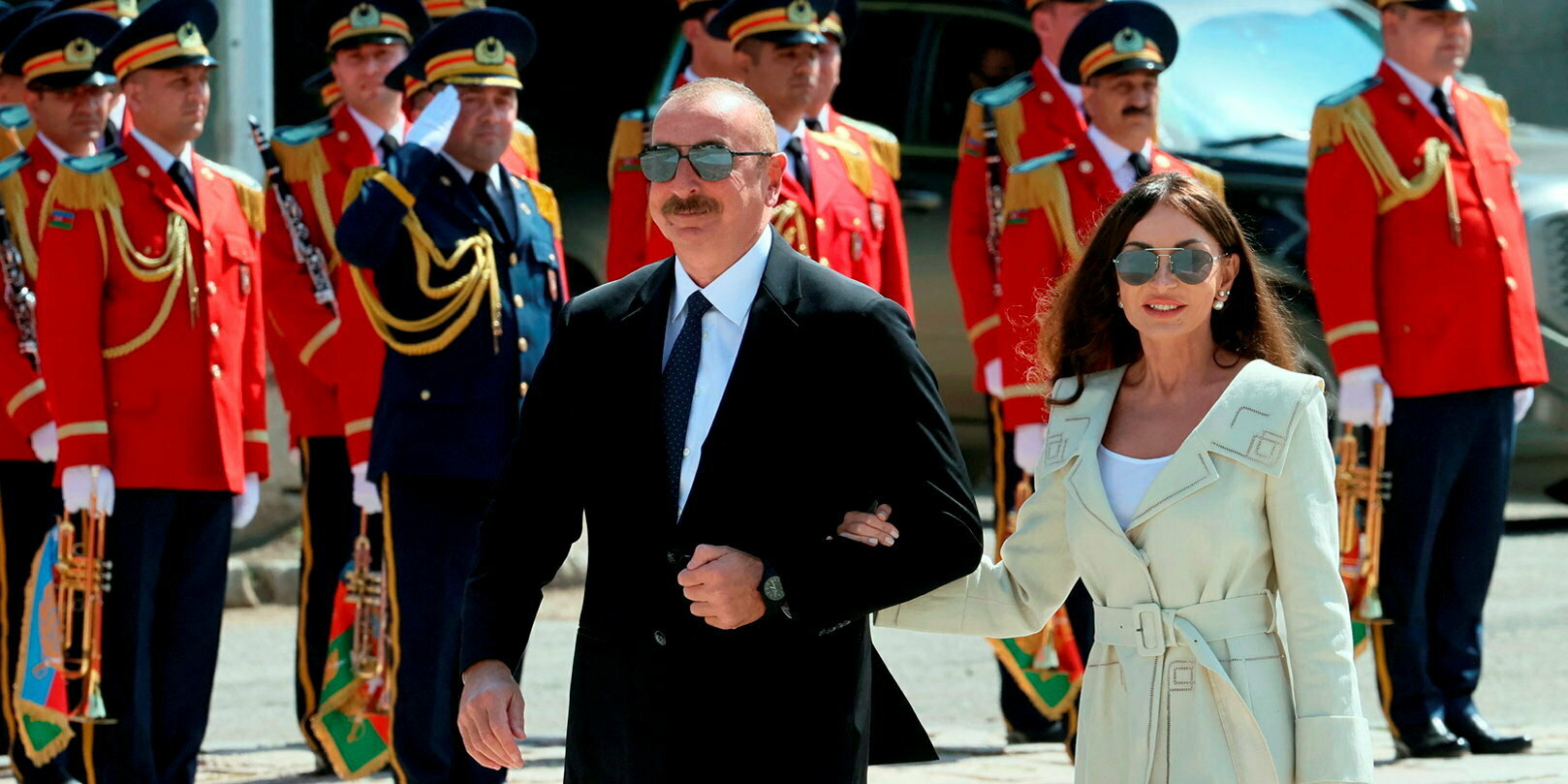
In this piece I try to argue that question, and the essay is not intended solely for an Azerbaijani audience…
These days I came across an article that was being circulated in Azerbaijan’s pro-government media (there’s hardly any independent media left), someone had sent it to me. Naturally, the piece was about sidelining the opposition, even making the petty claim that Azerbaijan doesn’t need such opposition at all; but one detail in the article caught my eye and in fact formed its core. A new opiate-like ingredient had been added to the text: the phrase “Azerbaijan needs ideological sovereignty”…
All the villainy happens against the loudest slogans. Keep that in mind… Patriotism, nationalism, dressing those slogans up in rhetoric about “putting the world in its place,” forcing them on the masses so they’ll swallow them, and if they won’t swallow them voluntarily, turning them into objects of forced consumption, and so on.
It struck me as somewhat laughable. If Azerbaijan’s thieving, corrupt regime has decided to load itself up with ideas, what does that mean? Are they going to give up stealing, or does “patriotic corruption” come in special molds and standards too? And what about Heydarism, the ideological load they’ve been vomiting onto society for years has that become obsolete as ideological cargo? There are many such questions, but there is one answer. The regime in Azerbaijan, and personally its head Ilham Aliyev, can never be carriers of genuine ideological concerns. Because they are ordinary thieves, and in this discussion I will also try to show what reflexes/characteristics privileged corruption-beasts share with and how they differ from, ordinary thieves.
Here’s the thing, dear friends. Ilham Aliyev is not a billionaire, not even a multi-billionaire, he is a “centi-billionaire.” Let me explain this distinction. If a person has assets of $1 billion or more, they are called a billionaire. If their wealth is between $1-10 billion, a multi-billionaire; above $10 billion, a super-billionaire; and above $100 billion, a “centi-billionaire.” This is not an official classification, it’s just a journalistic, corridor-way parlance and is understood that way.
Ilham Aliyev is a centi-billionaire. The volume, the value of his family’s assets exceeds $100 billion; even if it were $10 billion or thereabouts, the essence of the matter would not change, we are talking about wealth acquired through theft and plunder, therefore…
First, let me try to describe the main schemes by which this plunder is carried out. I’m not claiming to present a comprehensive report on the subject; I’m only saying it in the most general terms…
First: indirect control over state resources.
The president or circles close to his family can control the energy, infrastructure, telecommunications, construction and finance sectors. State contracts, tenders and concessions are directed through “private” companies that belong to them. Formally, in some cases companies are registered under different names, but in practice revenues are centralized. Lately they don’t even use different names- they just create them in their own names…
Second: offshore systems and hidden ownership.
Companies are set up in offshore jurisdictions (the British Virgin Islands, Seychelles, Luxembourg, etc.) to lose the trail of stolen wealth. Through these companies foreign properties, bank accounts, shares and investments are managed.
In investigations such as the Pandora Papers and Panama Papers, this very model has been documented with clear evidence.
Third: the distribution of wealth through family and close associates.
Members of the ruling family : children, siblings, or business partners; formally appear as “successful entrepreneurs” in various sectors. The main sources of state revenue: oil, gas, construction, and media are unofficially concentrated in the hands of these circles.
Fourth: corruption and non-transparent tender mechanisms.
In some cases, tenders and state projects are awarded without competition, in other words, to “one’s own company.” Through this method, hundreds of millions of dollars in hidden profits are accumulated, later transferred abroad, and turned into foreign investments.
Fifth: the factor of foreign investment and “laundered” wealth.
The stolen and looted revenues are later invested in London real estate, in company shares or funds in Europe. Thus, the money is converted into “legal capital.”
But that’s still not all, there are other methods and tools, only I’m running out of breath, so I’ll stop here.
If these mechanisms function continuously for decades, even a very small percentage of a country’s natural resource revenues directed to private networks can result in that person or family amassing billions of dollars in wealth even to the level of a centi-billionaire. Notice, I said “even a very small percentage.” But in reality, we’re talking about very large percentages and therefore, the outcomes are expressed in staggering figures.
Of course, this is a theoretical model it doesn’t refer to specific names; you can specify them yourself. Such systems have been extensively studied in Russia, Central Asia, Africa, and the Middle East. In Azerbaijan’s case, this model can also be described in a more detailed, branched form. For instance, one could conduct separate analyses for each sector SOCAR, other natural resources, construction, import–export operations but that’s not my purpose right now.
Do you know what my main point is? As I said at the very beginning: why would these people need ideology where did it suddenly come from, what purpose does it serve? After all, for a system of governance that plunders and steals the wealth of its own people, and for the person at its head, to have any “altruistic” values would be absurd. The very fact of mass corruption excludes that possibility. Do you know what we can compare the “values” of a network that has siphoned off billions through a nonstop corruption mechanism to? Let me tell you and I think you’ll find it interesting.
The first key question is this: how does a person or their inner circle who has accumulated such wealth through theft explain or justify this fact of plunder to themselves, and how do they soothe their own conscience? Because this is theft, after all. To digest it psychologically, a person must rely on certain self-soothing arguments.
Let’s analyze this on a psychological and rhetorical level that is, when a president (or authoritarian leader) steals vast national resources, how does he justify it to himself and others? Let’s examine it step by step. (This description is, of course, theoretical; the goal is to understand motivations and logic, not the methods of execution.)
First — the factor called internal rationalization, or self-persuasion: finding a moral template. The leader perceives himself as “special,” as a “self-sacrificing” figure, devoted to the idea that “I am saving the country, therefore I deserve to be rewarded.”
There is always the noble purpose excuse. Personal gain is framed as “serving the state and the people”: “This money is an investment for future generations.” And of course, which “future generations” those might be is never clarified.
The paranoid defense mechanism is always active. The corrupt individual sees every power they accumulate as essential for their own security. They think: “If I don’t consolidate my power, enemies will destroy me and the nation.”
Another psychological mechanism is what’s called moral disengagement. This allows the criminal to reduce the feeling of guilt by convincing himself: “They can’t understand this,” or “The victims are at fault.” There’s even a saying in Azerbaijani folklore that captures this attitude: “Sin only matters when you’re dead.”
There’s yet another mechanism perhaps you’ve recognized it before, but not summarized it this way external or public rationalization. You can also call it “convincing the people.”
Here we encounter the argument of national security and stability: in the corrupt person’s self-presentation, resources are portrayed as being used for “security, stability, and sovereignty.”
Another, more insidious mechanism is paternalism. The idea that “the people are not wise enough; they need guidance” justifies theft as a kind of benevolent necessity. This is the psychological formula that all persistent corrupt figures eventually adopt and internalize.
This dangerous and harmful mindset is then fed back to society through a variety of ideological questions and slogans fear of enemies and chaos, narratives about internal and external threats. If the leader is not strong, people are told, there will be chaos even if the current “comfort level” is minimal, it will be destroyed; there will be loss of wealth, and other terrors.
And then there is decorative digestion:
The display of achievements and infrastructure new buildings, stadiums, grand projects of dubious utility are presented as visible “proof” of success. The argument goes: “Look, these are the results of my hard work.”
You see, this entire process also relies on administrative hooliganism. We’ve all seen it; we keep observing it.
For example, the legal hooliganism of changing laws and institutions. Do I even need to explain how that works? Still, let me note: the adaptation of laws and institutions to serve personal interests serves one key purpose even if corruption itself isn’t legalized, by changing the rules and institutions, the accumulation of personal wealth appears legal.
Beyond this lies an ocean and in that ocean, the depersonalization of the ultimate source must occur. By presenting corruption as “business” or “economic policy,” they dull both economic and moral evaluation.
They know very well what crimes they’ve committed and they also know that to reduce society’s reaction, they must use certain socio-psychological mechanisms. These are all familiar to you mechanisms you’ve observed, and which are constantly performed to deceive you. Small cases of corruption and embezzlement are exposed, while large-scale theft gradually becomes normalized in public consciousness.
Constant propaganda and repetition, the ceaseless reiteration of the same narrative- creates in people a reflex of acceptance toward evil. Naturally, we can also observe the regime’s ongoing “scapegoat hunt.” You’ve probably realized that this is deliberate. By portraying the causes of economic problems as “speculators,” “corrupt officials,” or “foreign forces,” they mask the destructive, predatory role of the leader himself.

This effect is also used in another direction, one that could generally be called the delegitimization of the opponent: labeling critics as “foreign agents” or “enemies” in order to undermine their credibility.
Of course, you might say that these are tense, complex situations, and such intricate mechanisms require personal moral and psychological preparation. And you would be entirely right. Personal psychological conditioning is crucial, because it must preserve the internal balance of the person who stands at the center of this criminal mechanism. Adaptation to corruption cannot be judged externally, whether “successful” or not makes little difference. This adaptation occurs as the conscience is gradually sanded down in the name of “security and rewards.” I don’t say “polished,” because that would be too elegant a term. A conscience that has been sanded down in this way begins to normalize injustice as if it were the rule. Such a conscience creates around itself a circle of “right-minded” people, an iron circle into which ordinary, universal human morality cannot penetrate.
And the rhetoric of the corrupted conscience is something Azerbaijanis know very well. You’ve all heard the familiar slogans:
-“These riches are an investment in the country’s future”;
- “I’m protecting them, otherwise they’ll be lost”;
-“The dangers ahead require such measures”;
- “Those who criticize simply don’t understand the nation’s interests.”
And what about those who don’t criticize? Well, there have to be rewards for them too. The main purpose here is to weld personal gain to collective goals. For theft and plunder to continue, psychological support points must be strengthened. Loyalty is maintained by distributing benefits among the inner circle. Unchecked power and inflated self-confidence, or simply excessive egoism weaken the moral factor.
A leader’s justification of his own theft is a multi-layered process. Self-persuasion, public rationalization, institutional manipulation all these work together with propaganda. Psychologically, the system is reinforced both by the leader’s internal defense mechanisms (conscience, paranoia, privilege) and by public and rhetorical strategies (nationalism, security arguments, paternalism).
This psychological tension complex as it seems can also be explained through analogies between a grand-scale corrupt official and an ordinary thief, a petty burglar, or a cattle rustler. Since we’ve already ventured into this heavy topic, let’s continue with those parallels.
Both the privileged and the “ordinary” thief find excuses for their behavior: “Everyone does it,” “I’m poor,” “I deserve it,” “I work hard anyway.”
For moral reconciliation to soothe their conscience they minimize the perceived harm: “No one’s really hurt,” or “This state money is mine anyway.”
Then there’s the distortion of the risk–reward balance: in both cases whether it’s a petty thief or a high-level kleptocrat they believe they won’t be caught, and consider their behavior a “worthwhile risk.”
Both types also exhibit a selective attitude toward law and rules: “Rules don’t apply to me; they’re for others.” Every thief invents for themselves a special, exempt status.
But there are differences. For the grand-scale corrupt official, theft and plunder are not impulsive acts but a systematic process, deliberately maintained to consolidate status, preserve power, and retain control. Ordinary thieves, on the other hand, often steal simply to survive: out of material need or desperation for immediate gain.
For the kleptocrat, theft is carried out under the self-perception of “I am the law; I stand above the system.” For the common thief, it’s “I am a victim of the system.” The corrupt official moralizes his theft through terms like “governance,” “stability,” or “well-deserved reward.” The ordinary thief justifies his with “it’s a response to injustice.”
The elite thief is confident, protected by institutional power, he knows the system will shield him. The petty thief, unprotected, acts impulsively out of fear, knowing the system will punish him.
This difference also changes the emotional root of behavior: the first acts under stress and impulse; the second, the grand thief- acts with cold rationalization and calculation. And high-level thieves have far more dazzling tools for rationalization.
They have the media and information resources to justify themselves : they can even shape the laws. And unlike ordinary thieves, the thieves of the state and the system possess their own language of rationalization.
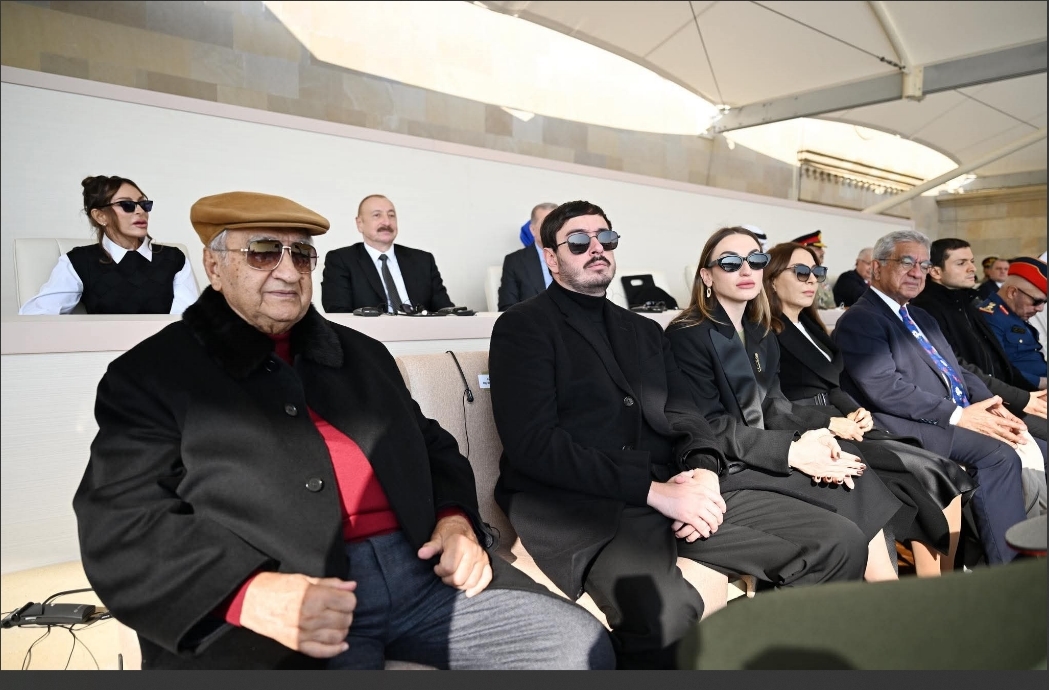
Abstract, ideological, and collective terms: “homeland,” “nation,” “stability.” You see, that’s exactly what I was saying from the very beginning. What kind of ideological weight can looters and corruptionists, whose similarities and differences with cattle or horse thieves could easily be listed with scientific precision, possibly carry? Can they have any at all?
Ilham Aliyev, as the chief thief of this system, is an ordinary plunderer who has never had and never will have, any ideological values. It is precisely through these processes that he has risen to the level of a centi-billionaire… In other words, the fortune he has amassed through theft and plunder exceeds one hundred billion dollars.
And with people like this, the only kind of discussion one can have is of this nature: the scope of the theft, the socio-psychological factors that drive it, and so on.